
Hey everyone! So today, I‘m going to share with you all some important instrumental concepts to take into consideration when you are creating music.
let‘s get into it.
Music Theory 101
So the concept of an instrumental is not new to music.
As a matter of fact it dates back to when Jesus was around and even before then too.
And what happens is that instrumentals are great in the fact that if you know the basics to create a great instrumental, that‘s probably 90% of all the work that you need to know in order to make a hit.
So let‘s talk about the components to a song including
- Drums
- synthesizer
- adlib
- Effects
- instruments
Drums

So the key takeaway that you should know about music is that it‘s very repetitive.
And actually a lot of most music is just the same drum pattern, same chord progression, even same instruments being played at a different artistic flavor if you will.
So the basic Meter that you should know is called Simple Quadruple meter.
Basically that‘s just 4/4 time signature.
Where you count the beat as 1 2 3 4 and then back again.
In this meter, which is what 90% of all pop music is written on, the basic drum pattern that you should be aware of is bass drum on 1 and 3 and snare on 2 and 4.
That‘s a good foundation to start making music.
But music can work in so many different ways than that.
And I have found that when you make drums there should be 2 principles that are followed.
The first is that the bass drum can go anywhere except 2 and 4 not just one and 3 but it is helpful if it lands on 1 and 3 at some point in the groove.
And the second is that it should be a pattern.
Meaning that for 16 bars you can‘t have a groove that changes every bar. It should be a pattern.
But you can add variety in the groove of the bass drum.
Like say for example you put the bass on 1 and 3 on the first bar and then in the second bar you put it on 1 and the and of 3, third bar you put it on 1 and the and of 4 and fourth bar you put 8th note bass drums and then repeat all over again.
It should all be a balance of how you want the groove to sound.
But keep in mind that music likes to keep it simple in order to sound good, so the simpler you get and the better it sounds to you, the better it is.
Instruments

The way that instruments should be is like a back up to the vocal.
Yes we do like to take the solos as guitarists, but if we really look back at all of the greatest hits that there ever was, you‘ll find that the guitar player just played in the background and helped the singer take the spotlight.
So chords should support the singer with harmony and dissonance.
If you don‘t know what those two words mean, harmony is togetherness. Imagine having two cars with the exact same color from the exact same manufacturer, that‘s harmony.
Now imagine a black car and a white car, that‘s disonance.
Disonance is contrast
Harmony is unison, in a way.
You need a balance of both disonance and harmony in order to make a song sound really good.
Which is the reason why we introduce guitars and pianos and synthesizers to the mix because they help create disonance and harmony with the melody.
But that‘s a little too technical for this blog post
What you should really understand is that simple chord progressions go a long way when it comes to creating disonance and harmony.
So here is some homework, go to your favorite search engine and type in 100 best chord progressions of all time.
It will show you the list of the best chord progressions that have ever been written and some famous songs that were written with it.
Synthesizers
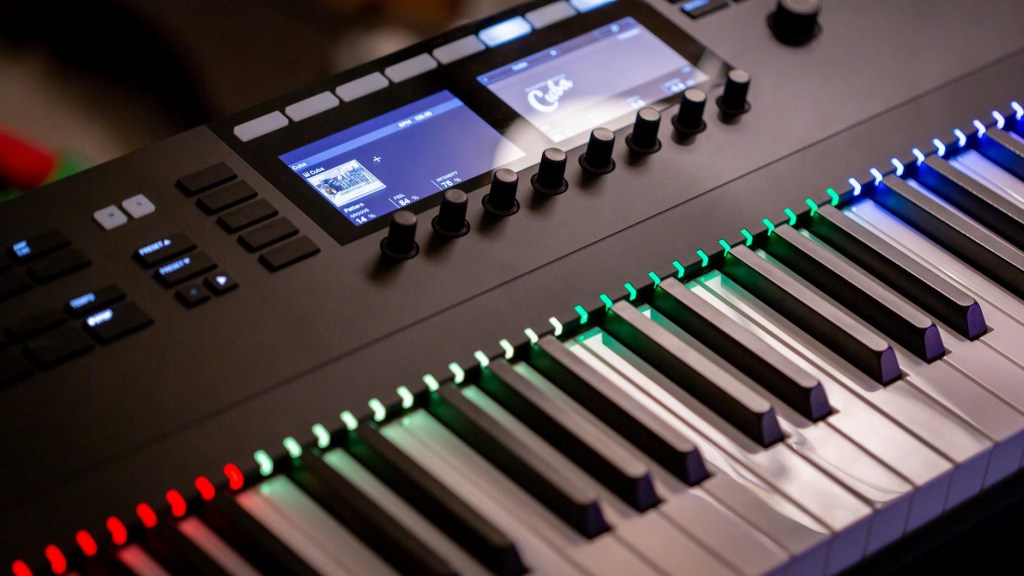
Synthesizers add a layer to the instruments.
Pro tip, when someone says that something sounds too thin, that means to layer the instrument with something else.
That helps to thicken the instruments.
So if you add a layer to the instruments with the synthesizers, it helps to bring it to life and sound really professional.
It can also add disonance.
You might notice on some synthesizers that it has a detune knob.
Detuning an instrument can add emotion to the instrument and help thicken the song even more.
But be careful because too much detune can just sound bad.
When you detune remember to do it just so slightly and nothing more.
If it ever starts to sound bad, then go back on the dial a little bit.
Add lib
This part you have to be really careful.
Because adlib can either make or break a song.
If you do it wrong, it can just sound like a big mess.
But if you do it right, it sounds rhythmically diverse and strong and well thought out.
Remember that when you‘re doing this part of a beat or song, that you should use your critical listening skills and say whether something sounds bad or good.
Sometimes it will take about 20 tries before an adlib will sound good.
This is where some artists spend hours upon hours in the studio.
Last but not least effects

Effects are usually done in the mixing stage of the music production process.
But it can be used creatively to create sounds that sound unique.
Remember that music is an art and that all the tools that are available to use are at your disposal to paint your canvass of musical thought.
There are some general guidelines as to how to use these tools and they help a lot, but if you think that a guitar would sound so much better by turning the reverb at full, then by all means do it.
If it sounds good, it‘s because it is good.
Broadcast
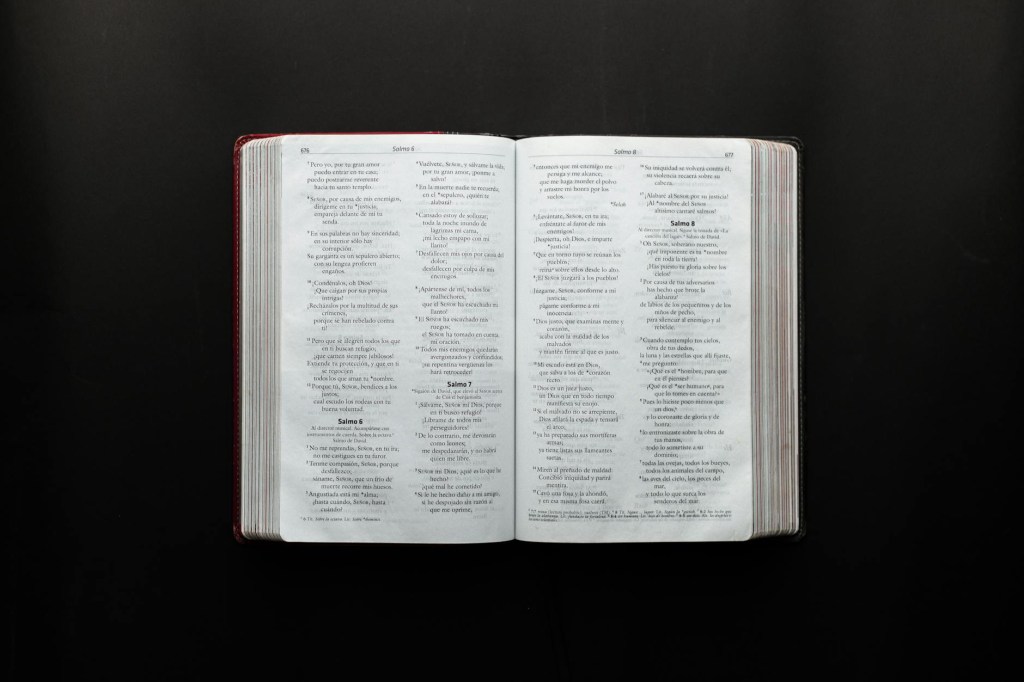
I sure hope that I have been an inspiration and a hope to you all. Please remember to pray, read your bible, go to church, and love God above all else. Like, comment, share, subscribe, and I will see you all next time.
If you want to go to heaven, then believe in Jesus and you will go to heaven. (John 3:16)
Thank you all for listening in on this blog post.
German Gonzalez, signing out!
 Greater Christianity
Leave a comment