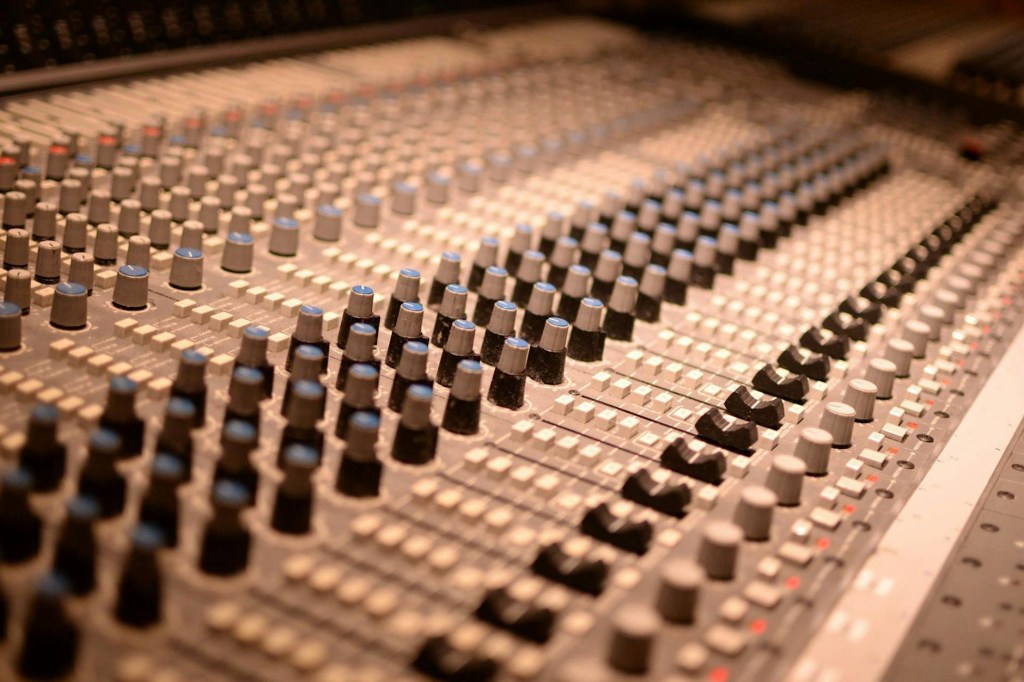
Hey everyone! So today, I’m going to share with you all how to use an EQ in a DAW for mixing music purposes.
Now, a little bit about this blog post, I don’t personally know how to mix for a cinema, so there might be some differences if you’re trying to mix for a movie or something.
In a song setup, you are usually mixing with two speakers, but in a cinema I think the setup can be up to 6.
So like yeah, anyways, here it is.
EQ basics
So let’s talk about what an EQ can do and what it can’t do.
In order to use an EQ, you should already have a professionally recorded and produced song or album.
An EQ or even mixing in general is not going to fix a poorly produced song.
Mixing is supposed to fix some problems yes, but it’s more so in the dynamics of the sound not in the composition or performance of the actual piece.
You can take elements that are in mixing and use it to compose your song, but it doesn’t exactly work the other way around.
You can’t take a poorly produced song and expect for your mix to fix it.
So what is an EQ?
An EQ is like a chisel, it sculpts the music into how you want it sound.
Specifically it chisels the frequencies that you want.
So let’s understand some basics in frequencies.
Every sound that you ever hear has frequencies all over the frequency spectrum.
And when you use the EQ, it’s now your turn to chisel away the frequencies that you want to cut or the ones that you want to boost.
Two mixing terms right there.
Cut means that you want to eliminate that frequency and boost means you want to magnify it or make it bigger.
Now as singer-songwriters, we often want to mix for the vocals.
So most often than not, we want to cut a little bit of the frequencies where the vocals lay from every instrument and what you want to do is for every instrument, Boost a little bit or cut the frequencies where that instrument lays so that way you can make space for the instruments in your mix.
So like say for example, this is a traditional setup right here, the bass is at 100 hertz, the Vocals are at 1.5 Kilohertz, and the snare is at 1.9 Kilohertz.
What you want to do is to cut where the bass is from the snare and the vocals, cut where the vocals is from the bass and snare, and cut where the snare is from the bass and vocals.
So that way there is space in the mix for the instruments.
And where the Bass is boost the bass, where the snare is boost the snare, and where the vocals are, slightly boost the vocals.
All of those you slightly boost.
That’s in theory and that would be in a perfect world.
In reality, there are more factors that tell you what you should cut and boost.
Like different microphones can cause different vocals, the way you record a guitar can affect how it sounds too, how you mic a drum kit too also plays into affect.
Also, where you are hearing the music from.
So say for example if you hear the song from a pair of Yamaha HS5s compared to a JBL.
Also, the room that you’re in will play a part in determining how it sounds.
A square room that has the studio away from the corners with no windows is perfect for mixing. But obviously the only rooms that don’t have windows are only professional recording studios and specialty room.
So, even though what I just mentioned is true and it’s the skeleton as to what you should do, in an actually setting you might need to boost at 1.6 Kilohertz where the vocals are at, Boost at 1.6 Kilohertz where the snare is at, and boost 150 hertz where the bass is at. So yes, you can still take this formula and apply it at all of your instruments.
you would also need to cut appropriately too.
Just remember to use your ears to determine how to cut and boost.
Broadcast
I sure hope that I have been an inspiration and a hope to you all. Please remember to pray, read your bible, go to church, and love God above all else. Like, comment, share, subscribe, and I will see you all next time.
If you want to go to heaven, then believe in Jesus and you will go to heaven. (John 3:16)
Thank you all for listening in on this blog post.
German Gonzalez, signing out!
 Greater Christianity
Leave a comment