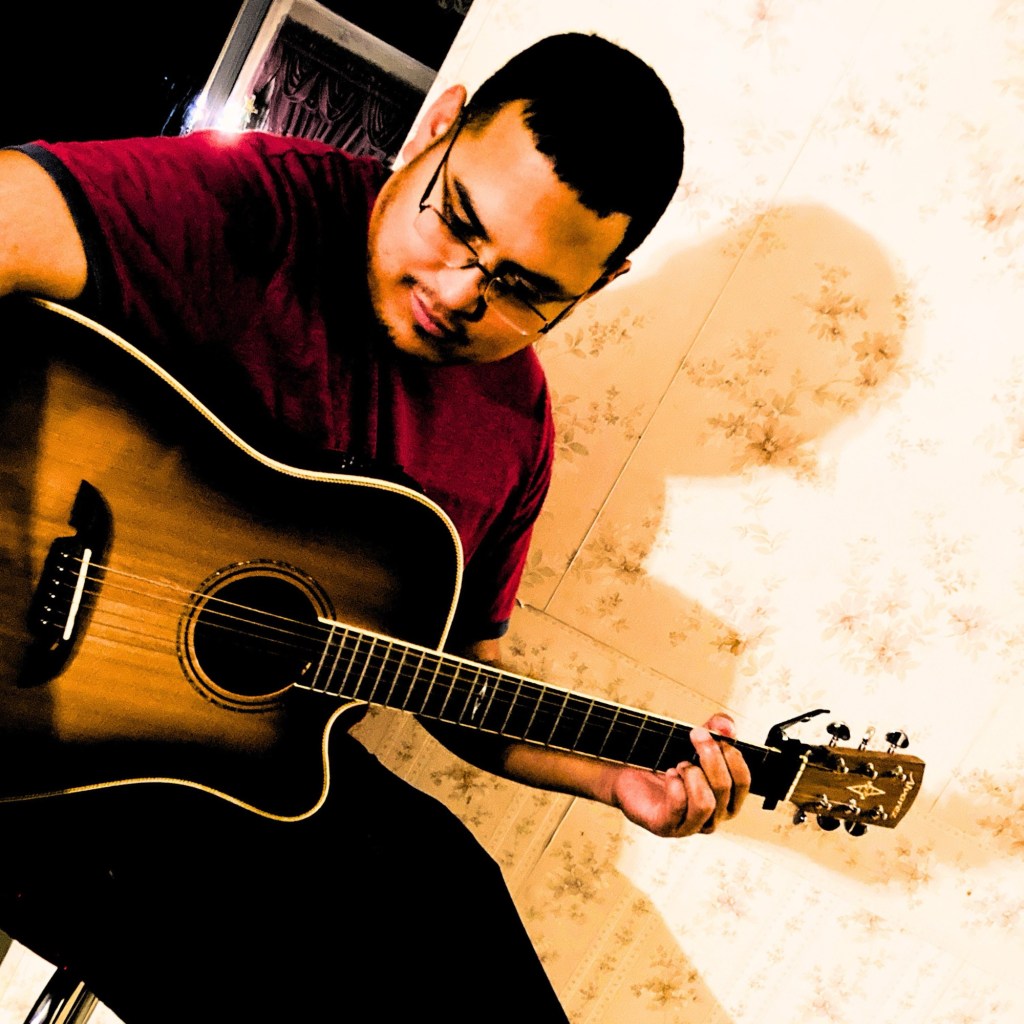
How to Play Guitar on a Budget: A Complete Guide for Beginners
Learning to play guitar does not have to be an expensive hobby. In fact, one of the great things about guitar is that you can start with relatively little money and continue improving for years without constantly buying new equipment.
Whether you want to learn guitar so you can play your favorite songs, write your own music, accompany yourself while singing, play in church, or simply enjoy making music, you can build a perfectly good setup without spending thousands of dollars.
The most important thing to remember is that your guitar playing will matter much more than the price of your equipment.
A beginner with a $200 guitar who practices consistently can become a much better musician than someone with a $2,000 guitar who rarely picks it up.
Story time,
You want to know how I started playing the guitar? What was the beginning of my musical journey? Honestly, it all started with a 65 dollar guitar combo.
You should’ve seen this thing, it was the Wal-Mart guitar that my parents could afford and they gave it to me because they didn’t expect me to do anything with music.
It was an electric guitar, probably the cheapest electric guitar that you could think of .
But I played the mess out of it.
I played it so much that I remember my hands would turn white with all of the skin that was shredded on the guitar strings.
And it was with that guitar, that I headlined my first concert.
Yeah I remember that guitar so clearly.
So don’t be dismayed if you think that guitar has to be an expensive hobby cause it doesn’t have to be.
And as a matter of fact, I would highly recommend if you were to start the guitar, I would recommend starting with a really inexpensive guitar. Find the cheapest guitar that you could find because if you buy a brand new guitar, you are going to destroy that thing. What happens is that the guitar is a really awkward instrument to hold, it looks cool, but it’s big and bulky and heavy and if you’re not careful, which almost no guitar isn’t is careful, then you’re going to be bumping into things and destroying that guitar.
This guide will show you how to learn guitar while keeping your expenses under control.
1. Start With the Guitar You Actually Need
The biggest mistake beginners make is believing they need an expensive guitar before they can begin learning.
You don’t.
A reasonably well-made beginner guitar can be enough to teach you chords, scales, rhythm, fingerpicking, songwriting, and dozens of other skills.
If you’re buying your first guitar, focus on:
- Comfortable playability
- A neck that feels good in your hands
- Frets that don’t cause excessive buzzing
- Tuners that reasonably hold their tuning
- Good overall construction
- A sound you enjoy hearing
You don’t necessarily need premium wood, expensive electronics, elaborate finishes, or a famous brand.
Your goal is to find an instrument that makes you want to practice.
That’s much more important than having an impressive-looking guitar.
2. Consider Buying Used
One of the best ways to save money on guitar is to buy used equipment.
Many guitarists eventually upgrade their instruments and sell their older guitars. This means you can sometimes find a very good instrument for significantly less than its original retail price.
Look at:
- Local music stores
- Used instrument shops
- Online marketplaces
- Guitar forums
- Pawn shops
- Friends who play guitar
- Local musicians who are upgrading their equipment
However, don’t buy the first used guitar you see.
If possible, have an experienced guitarist look at it with you.
Check the neck, frets, bridge, tuning machines, electronics if it is an electric guitar, and overall condition.
You don’t want to save $100 on the purchase only to discover that the guitar needs $200 of repairs.
3. Acoustic or Electric?
If you’re on a tight budget, you may wonder whether you should buy an acoustic or electric guitar.
The answer depends on what kind of music you want to play.
An acoustic guitar has one major advantage for budget-conscious musicians: you don’t need an amplifier to start playing.
You can pick it up and practice immediately.
An electric guitar requires additional equipment, such as an amplifier or another way to hear the instrument properly.
However, electric guitars can sometimes be easier for beginners to play because their strings may have lower tension and their necks can be more comfortable.
So don’t automatically assume acoustic is better.
Think about the music you actually want to make.
If your dream is to play Christian acoustic worship songs, singer-songwriter music, or accompany yourself while singing, an acoustic guitar may be the simplest choice.
If you want to play rock, metal, blues, or electric worship music, an electric guitar may make more sense.
But here is a pro tip
Every great guitarist starts on the acoustic guitar. or a really cheap electric. Me personally while I had my electric, I was practicing on an acoustic from my school.
4. Don’t Buy Every Accessory Immediately
Walking into a guitar store can make you feel like you need dozens of accessories.
You don’t.
A beginner may be tempted to buy:
- Multiple guitar cables
- Expensive straps
- Several pedals
- An expensive tuner
- A huge pedalboard
- Special picks
- Multiple effects units
- Studio microphones
- Recording equipment
- Expensive cases
- Guitar stands
- Replacement pickups
Most of these things can wait.
Start with the essentials.
For an acoustic guitarist, that might simply be:
Guitar + tuner + picks + spare strings
That’s enough to get started.
If you’re playing electric guitar, add an amplifier and cable.
Everything else can come later.
5. Use Free Guitar Lessons
You don’t necessarily need expensive private lessons to learn the basics of guitar.
There are countless free educational resources available online.
You can learn:
- Open chords
- Barre chords
- Scales
- Strumming patterns
- Fingerpicking
- Music theory
- Chord progressions
- Songwriting
- Ear training
- Improvisation
The challenge isn’t finding information.
The challenge is sticking with one learning path long enough to improve.
Beginners sometimes watch ten different guitar teachers and learn a little bit from each one without developing a consistent practice routine.
Choose a structured approach and follow it.
You can always explore other teachers later.
6. Learn Songs You Actually Like
One of the cheapest and most effective ways to improve is to learn songs.
Pick songs you genuinely enjoy.
If you’re a Christian musician, you could start with worship songs or Christian songs that use relatively simple chord progressions.
Learning real songs teaches you several skills simultaneously:
- Chord changes
- Rhythm
- Timing
- Memorization
- Song structure
- Dynamics
- Listening
- Musical expression
And there’s another advantage.
When you learn a song you love, practicing doesn’t feel as much like homework.
You are working toward something you actually want to play.
7. Learn the Most Useful Chords First
You don’t need to learn hundreds of chords before you can play music.
Start with common open chords such as:
- C
- G
- D
- A
- E
- Am
- Em
- Dm
With these chords, you can already play an enormous number of songs.
Once you’re comfortable with them, learn additional chords and eventually move into barre chords.
Don’t rush.
Being able to change smoothly between a few chords is more valuable than knowing fifty chords but struggling to play them in time.
8. Practice Rhythm Before Buying Equipment
Guitar is a rhythm instrument. Valuable lesson for all guitarists, Guitar is a rhythm instrument. If you pay attention to most famous guitar songs, you will notice that even the lead guitarist is playing chords and variations of chords and in reality, he is playing things that are backing
up the vocalist. That means that we need to have a wide rhythmic vocabulary.
You might ask yourself, what is rhythm?
Rhythm in its most simplest form is knowing when to play the note. The dictionary definition found in music theory books is Rhythm is a sequence of notes played in a specific pattern.
But in all essence it’s know when to play the notes.
A guitarist with excellent rhythm can sound great with very basic equipment.
A guitarist with poor rhythm can sound bad with the most expensive guitar in the store.
Spend time practicing:
- Downstrokes
- Upstrokes
- Alternate strumming
- Muting
- Accents
- Different tempos
- Metronome exercises
A metronome is inexpensive and can even be replaced by free apps and online tools.
Practice slowly.
Then gradually increase the tempo.
Your goal isn’t simply to play the correct chords.
Your goal is to play them in time.
9. Use a Free Tuner
You don’t need an expensive tuner.
There are free tuner apps and online tuners that can help you keep your guitar in tune.
Learning to tune your guitar is an important part of becoming an independent musician.
A guitar that is out of tune can make practice frustrating and can also train your ear incorrectly.
Make tuning your instrument part of your routine.
Before you practice:
Tune → warm up → practice → play songs
It takes very little time.
10. Don’t Become Obsessed With Guitar Gear
The guitar industry makes it incredibly easy to become distracted by equipment.
You might start thinking:
“I need a better guitar.”
Then:
“I need a better amplifier.”
Then:
“I need a distortion pedal.”
Then:
“I need a delay pedal.”
Then:
“I need a better microphone.”
Before you know it, you’ve spent thousands of dollars without necessarily becoming a better guitarist.
Equipment can be fun.
But equipment should support your musicianship rather than replace it.
Ask yourself:
Will buying this actually help me accomplish something I currently cannot do?
If the answer is no, you may want to keep your money.
11. Learn Basic Guitar Maintenance
Learning basic maintenance can save you money over time.
You don’t need to become a professional guitar technician.
But you should understand basic tasks such as:
- Changing strings
- Cleaning your guitar
- Tuning
- Checking your cables
- Adjusting basic setup issues
- Storing your instrument properly
Replacing your own strings is particularly useful.
Once you know how to do it, you don’t have to pay someone else every time your strings need changing.
12. Take Care of Your Guitar
The cheapest repair is the repair you never need.
Store your guitar somewhere safe.
Avoid leaving it where it can easily be knocked over.
Don’t leave it exposed to extreme temperatures for long periods.
Keep food and drinks away from the instrument.
Use an appropriate case or gig bag when transporting it.
Taking care of your guitar can extend its useful life for many years.
13. Learn Guitar for Songwriting
If you want to become a songwriter, guitar can be an incredibly affordable songwriting tool.
You don’t need a recording studio.
You can take your guitar, find a chord progression, and begin experimenting with melodies and lyrics.
Try combining simple chords in different ways.
For example:
G – D – Em – C
is a familiar progression that can serve as a starting point for songwriting.
But don’t stop there.
Change the order.
Change the rhythm.
Change the tempo.
Use different chord voicings.
Add a capo.
Experiment with melodies.
The goal isn’t to find a complicated progression.
The goal is to create something that communicates an idea or emotion.
14. Use a Capo Instead of Learning Everything in Every Key
A capo can be a relatively inexpensive and useful guitar accessory.
It allows you to change the effective key of many songs while continuing to use familiar chord shapes.
For example, if you know a song using G, C, and D shapes but need to sing it higher, a capo may allow you to raise the pitch without learning completely different chord shapes.
This can be particularly useful for singer-songwriters.
Instead of buying more equipment, sometimes a small accessory can make your existing guitar much more versatile.
15. Learn to Play and Sing at the Same Time
If you’re interested in performing, one of the most valuable skills you can develop is singing while playing guitar.
Start slowly.
Learn the guitar part first.
Then learn the vocal melody.
Finally, combine them.
Don’t be discouraged if this feels surprisingly difficult.
Your brain is coordinating several things simultaneously:
Lyrics + melody + rhythm + chords + timing
With practice, these movements become more automatic.
This is especially useful if you want to perform at church, open mics, coffee shops, or other acoustic settings.
A really good practice to do is to play guitar while you talk to other people. IF you can do that then you can sing and play guitar at the same time.
16. Practice for 20–30 Minutes Instead of Waiting for a Two-Hour Session
You don’t need to practice for hours every day.
Consistency is often more important than marathon sessions.
A simple 30-minute practice session might look like this:
5 minutes: Warm-up
10 minutes: Chord changes and technique
10 minutes: Learn a song
5 minutes: Freestyle or songwriting
If you can do that consistently, you’ll accumulate a significant amount of practice over several months.
Thirty minutes a day adds up to more than 180 hours in a year if you practice every day.
Even if you miss days, consistent practice can produce substantial improvement.
17. Don’t Compare Your Guitar to Someone Else’s
Social media can make guitar playing seem intimidating.
You might see musicians playing expensive instruments through enormous amplifiers and complicated pedalboards.
Remember that you’re seeing the finished product.
You don’t see the years of practice that came before it.
You don’t need their equipment to begin your own musical journey.
Your $200 guitar can still teach you:
chords, rhythm, songwriting, melody, performance, and musicianship.
Those skills stay with you even if you eventually upgrade your equipment.
18. Set a Guitar Budget
If money is tight, give yourself a specific guitar budget.
For example:
Initial budget: $250–$400
Then avoid continuously buying accessories.
You can always create a second budget later when you know exactly what you need.
This prevents your guitar hobby from becoming an endless stream of purchases.
Remember:
Your budget should serve your musical goals.
Not the other way around.
19. Consider Borrowing Equipment
If you’re not sure whether guitar is for you, consider borrowing an instrument before spending significant money.
A friend or family member may have a guitar sitting unused.
A church musician may have an older instrument.
A local musician may be willing to let you try different guitars.
This allows you to discover whether you genuinely enjoy playing before making a major purchase.
20. The Best Investment Is Your Practice
Ultimately, the cheapest way to become a better guitarist is to practice.
You can have:
- A $2,000 guitar
- A $1,500 amplifier
- A $500 pedalboard
- Expensive recording equipment
and still struggle if you don’t practice.
Meanwhile, someone with a basic guitar who practices consistently can become an excellent musician.
If you’re a Christian, you can also view your musical development as an opportunity to develop your God-given gifts.
You don’t need the most expensive equipment to create meaningful music.
You can begin with what you have.
You can learn one chord.
Then another.
Then a song.
Then another song.
Eventually, those simple skills can become the foundation for songwriting, performing, worship, recording, and serving others through music.
Final Thoughts
Playing guitar on a budget isn’t about buying the cheapest possible equipment.
It’s about spending money intentionally.
Buy a guitar that is comfortable and reliable. Learn to take care of it. Use free educational resources. Practice consistently. Learn songs you enjoy. Avoid unnecessary gear purchases. And focus on developing your musicianship rather than constantly upgrading your equipment.
You don’t need a professional studio to start making music.
You don’t need a $3,000 guitar to write a great song.
You don’t need a giant pedalboard to become a good guitarist.
You need an instrument, some patience, and a willingness to practice.
Start where you are.
Use what you have.
Learn consistently.
And let your playing grow over time.
The guitar sitting in your hands today may be the same instrument that helps you write your first song, perform your first show, lead your first worship set, or share music with someone who desperately needs encouragement.
Your budget doesn’t have to limit your musical dreams.
Broadcast

I sure hope that I have been an inspiration and a hope to you all. Please remember to pray, read your bible, go to church, and love God above all else. Like, comment, share, subscribe, and I will see you all next time.
If you want to go to heaven, then believe in Jesus and you will go to heaven. (John 3:16)
Thank you all for listening in on this blog post.
German Gonzalez, signing out!


Leave a Reply