Why a Laptop or Tablet Is Essential for Musicians in Today’s Music Industry
Introduction
Music has always been about creativity, passion, expression, and connecting with people. Whether someone plays guitar, piano, drums, violin, sings, produces electronic music, or performs in a band, having the right tools can make a significant difference to their musical journey. While traditional instruments remain at the heart of music-making, technology has become an increasingly important part of the modern music industry.
One of the most valuable investments a musician can make today is purchasing a laptop or tablet. These devices are no longer simply for browsing the internet, sending emails, or watching videos. They have become powerful musical tools that allow musicians to record, compose, arrange, edit, produce, promote, and share their work.
From practising an instrument at home to recording a professional-quality song, a laptop or tablet can support almost every aspect of a musician’s career. They also provide access to educational resources, music production software, digital sheet music, online collaborations, and opportunities to reach audiences around the world.
In this article, we explore why owning a laptop or tablet is essential for musicians and how these devices can help improve creativity, productivity, musical development, and professional opportunities.
1. Music Production and Recording
One of the biggest reasons musicians need a laptop or tablet is the ability to record and produce music.
In the past, recording music often required access to expensive recording studios, large mixing desks, multiple recording machines, and specialist equipment. Although professional studios remain important, modern technology has made music production much more accessible.
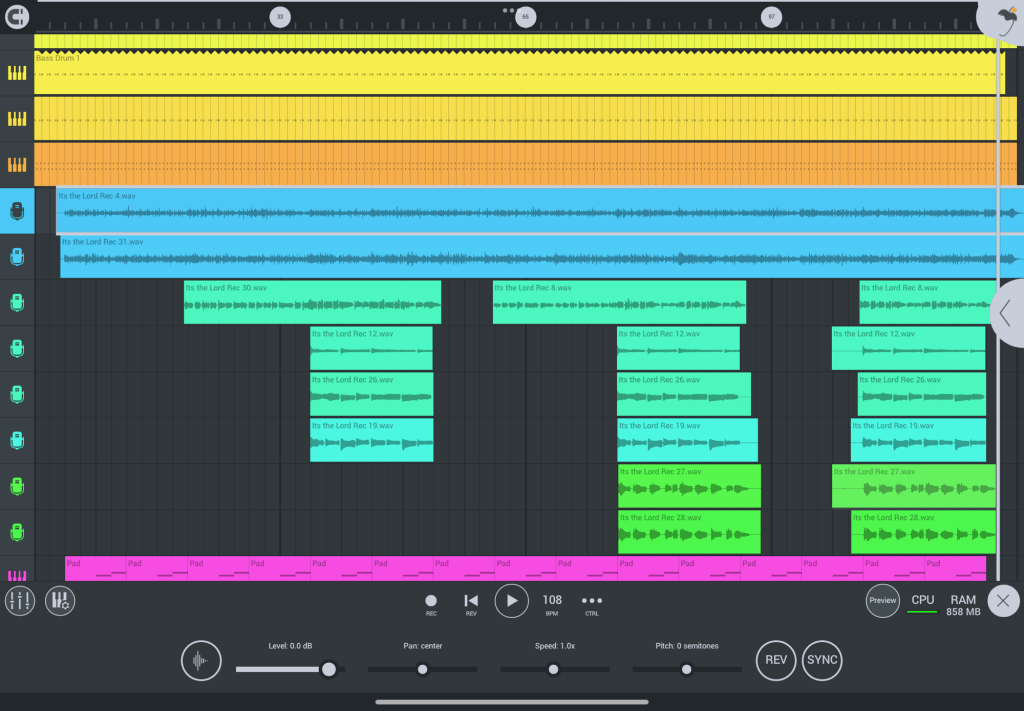
With a laptop or compatible tablet, musicians can use Digital Audio Workstations (DAWs) such as Logic Pro, Ableton Live, FL Studio, GarageBand, and other recording applications.
A DAW allows musicians to:
- Record vocals and instruments.
- Create drum patterns and musical arrangements.
- Add virtual instruments and synthesizers.
- Edit and arrange individual tracks.
- Apply effects such as reverb, compression, and equalisation.
- Mix and master recordings.
- Export finished music for distribution.
For example, a singer-songwriter can record vocals and guitar parts at home, add additional instruments using virtual software, and produce a complete song without needing to book expensive studio time.
According to Focusrite, a Digital Audio Workstation is a central tool for recording, editing, arranging, and producing audio. It brings multiple music-making activities together in one environment (Focusrite, 2026).
This makes a laptop or tablet an incredibly valuable investment for musicians who want greater independence over their recording and production.
2. Access to Music Theory and Educational Resources
Another important benefit of owning a laptop or tablet is access to music education.
Musicians never stop learning. Even experienced professionals need to develop their skills, understand new musical techniques, and explore different styles.
The internet provides access to thousands of educational resources, including:
- Online instrumental lessons.
- Music theory tutorials.
- Vocal training exercises.
- Sight-reading tutorials.
- Chord and scale demonstrations.
- Masterclasses with professional musicians.
- Music production courses.
- Educational videos and demonstrations.
For example, a guitarist can watch tutorials explaining advanced chord progressions, while a pianist can access demonstrations of classical compositions and practise alongside recordings.
Musicians can also use digital applications to improve their understanding of rhythm, harmony, melody, and composition.
Research published in Frontiers in ICT examined technology use among 338 amateur, student, and professional musicians. The research found generally positive attitudes towards technology in music learning and identified opportunities for technology to support independent practice and interaction between students and teachers (Frontiers in ICT, 2019).
Having a laptop or tablet means musicians can access learning materials whenever they need them, rather than relying entirely on scheduled lessons.
This can encourage independent learning and help musicians become more confident and knowledgeable.
3. Digital Sheet Music and Music Notation
For instrumentalists, singers, orchestral performers, and music students, reading sheet music is an important part of everyday musical life.
Carrying around folders full of printed music can become inconvenient, particularly for musicians who perform regularly or work with large collections of musical arrangements.
A tablet provides an excellent alternative because musicians can store hundreds or even thousands of pieces of sheet music digitally.
Applications and software for music notation allow users to:
- Read digital sheet music.
- Organise musical scores.
- Create original compositions.
- Transpose music into different keys.
- Write arrangements for different instruments.
- Edit existing musical notation.
- Share scores with other musicians.
This is particularly useful for pianists, orchestral musicians, church musicians, musical directors, and session performers.
Instead of carrying several heavy folders to rehearsals, a musician can take one lightweight tablet containing their entire music library.
The Independent Society of Musicians identifies score and notation software such as Sibelius, Finale, and MuseScore as useful tools for producing musical scores and parts, including playback of written music (Independent Society of Musicians, 2024).
Digital sheet music can also make rehearsals more organised, as musicians can quickly locate specific pieces and make notes without damaging original printed scores.
4. Improving Practice and Musical Development
Practising regularly is essential for improving as a musician. However, practising without feedback can sometimes make it difficult to identify mistakes or recognise areas that need improvement.
A laptop or tablet can help musicians make their practice sessions more effective.
For example, musicians can record themselves playing an instrument or singing and listen back to identify timing issues, incorrect notes, pitch problems, and areas that need further attention.
They can also use applications for:
- Metronome exercises.
- Instrument tuning.
- Ear training.
- Rhythm development.
- Sight-reading practice.
- Backing tracks.
- Performance recording.
Recording practice sessions is particularly useful because musicians can compare their progress over time.
A pianist might record a difficult piece at the beginning of the month and compare it with a recording made several weeks later. A singer could record vocal exercises to monitor pitch accuracy and consistency.
The Independent Society of Musicians highlights how tablets can be used to record and replay performances, helping musicians review work in progress and build portfolios of their musical development (Independent Society of Musicians, 2024).
This demonstrates that a laptop or tablet is not just a production tool; it can also become a personal music teacher and practice assistant.
5. Live Performance and Stage Preparation
Technology is now widely used in live music performance.
Musicians increasingly rely on laptops and tablets to organise performances, access backing tracks, display lyrics, control virtual instruments, and manage electronic equipment.
For example, a solo performer may use a laptop to play backing tracks while singing or playing guitar. A keyboard player might use a tablet to access digital sheet music, while a DJ may use a laptop to organise and control music during a performance.
Other useful applications include:
- Setlist management.
- Digital lyrics and chord charts.
- Backing-track playback.
- Virtual instruments.
- MIDI control.
- Live audio processing.
- Performance notes and schedules.
Having everything organised digitally can reduce the amount of equipment musicians need to carry.
Tablets are particularly useful on stage because they are lightweight, portable, and easy to position on a music stand.
The Independent Society of Musicians also identifies displaying lyrics, playing backing tracks, and using simple musical loops as practical applications of tablets in musical performance (Independent Society of Musicians, 2024).
For professional performers, this technology can make live performances more efficient and organised.
6. Collaboration with Other Musicians
Music is often a collaborative activity. Bands, producers, singers, instrumentalists, songwriters, and composers regularly work together to develop musical ideas.
A laptop or tablet makes collaboration much easier, particularly when musicians cannot physically meet in the same location.
Musicians can share audio recordings, exchange musical arrangements, send project files, and communicate through online platforms.
For example, a songwriter could record a guitar progression at home and send it to a vocalist in another country. The vocalist could record a melody over the arrangement and return the recording for further editing.
Cloud-based music production platforms can also allow multiple musicians to work on projects remotely.
This creates opportunities for musicians to:
- Work with artists internationally.
- Exchange musical ideas.
- Receive feedback on recordings.
- Collaborate on songwriting.
- Share arrangements and compositions.
- Develop professional relationships.
The Midwest Clinic’s 2024 music production guidance highlights how cloud-based digital audio workstations can support music-making from different locations and enable collaboration between users.
This is particularly important in an increasingly connected music industry, where geographical distance does not necessarily prevent musicians from working together.
7. Marketing, Promotion, and Building a Music Career
Being a talented musician is important, but building a successful music career also requires promotion and communication.
Musicians need to make people aware of their music, performances, services, and creative projects.
A laptop or tablet can become an essential marketing tool.
Musicians can use their devices to:
- Create promotional posters and graphics.
- Edit music videos.
- Design album artwork.
- Manage social media accounts.
- Update websites.
- Contact venues and promoters.
- Create electronic press kits.
- Upload music to streaming platforms.
- Manage bookings and performance enquiries.
Social media platforms have created opportunities for independent musicians to reach audiences without relying entirely on record labels or traditional promotional companies.
A musician can record a performance, edit the video, create artwork, and publish promotional content using a single device.
They can also use their laptop to manage their professional image and communicate with potential clients, venues, music teachers, and collaborators.
For musicians who want to work independently, these skills can be just as important as their musical abilities.
8. Portability and Flexibility
One of the greatest advantages of laptops and tablets is portability.
Musicians do not always practise, compose, or work in a traditional recording studio. Inspiration can happen almost anywhere.
A laptop allows musicians to work at home, in rehearsal rooms, at educational institutions, in recording studios, or while travelling.
Tablets offer even greater convenience for certain activities because they are generally lighter and easier to carry.
For example, a musician waiting backstage before a performance could review their setlist, check chord charts, or listen to a backing track.
A songwriter travelling on a train could use a tablet to write lyrics, record a melody, or develop a musical idea.
Intel’s guidance on choosing laptops for music production explains that musicians should consider their working environment, portability requirements, screen size, processing power, and storage when selecting a device (Intel, 2026).
This highlights the importance of choosing technology that suits an individual’s musical needs.
9. Developing Creativity and Experimenting with New Sounds
Perhaps one of the most exciting reasons musicians should own a laptop or tablet is the opportunity to experiment creatively.
Modern music software provides access to thousands of virtual instruments, sound libraries, effects, loops, and samples.
A musician who primarily plays an acoustic instrument can experiment with electronic sounds, orchestral arrangements, synthesizers, and entirely new musical styles.
A guitarist could explore electronic production, while a classical musician could experiment with film scoring or digital composition.
MIDI technology also allows musicians to control virtual instruments and create musical performances using electronic keyboards and other compatible controllers.
According to the MIDI Association, MIDI plays an important role in modern music production by allowing electronic instruments, computers, and other compatible devices to communicate and exchange musical performance information (MIDI Association, 2015).
This technology gives musicians the freedom to experiment with sounds and arrangements that might otherwise be difficult or expensive to access.
A laptop or tablet can therefore help musicians move beyond traditional musical boundaries and discover new creative possibilities.
10. Choosing Between a Laptop and a Tablet
Although both devices offer considerable benefits, the best choice depends on the musician’s requirements.
A laptop is generally the better option for musicians who want to undertake more demanding music production, multitrack recording, advanced editing, and professional audio mixing.
Laptops also tend to offer more extensive software options, physical connections, and multitasking capabilities.
A tablet, on the other hand, is ideal for musicians who prioritise portability, digital sheet music, performance organisation, simple recording, and music applications.
Many musicians may benefit from owning both devices because they can complement each other.
When choosing a device, musicians should consider:
- Processing power: Important for running demanding recording and production software.
- Memory: Helps manage multiple applications, audio tracks, and virtual instruments.
- Storage: Essential for keeping recordings, samples, projects, and musical files.
- Battery life: Particularly important for travelling musicians and live performers.
- Connectivity: USB, audio interfaces, MIDI controllers, and other equipment may require compatible connections.
- Screen size: Larger displays can make editing, arranging, and reading music easier.
- Software compatibility: Always check that the device supports the applications you intend to use.
The most expensive device is not necessarily the best choice. Musicians should select technology that matches their budget, experience, and musical ambitions.
Conclusion
A laptop or tablet has become one of the most valuable tools a modern musician can own.
These devices provide opportunities to record and produce music, develop instrumental skills, access educational resources, read digital sheet music, organise performances, collaborate with other artists, and promote musical projects.
Most importantly, they give musicians greater creative independence.
Technology does not replace musical talent, dedication, practice, or the emotional connection that comes from performing an instrument. Instead, it provides additional tools that can help musicians develop their abilities and bring their creative ideas to life.
Whether someone is a beginner learning their first instrument, a student studying music, a singer-songwriter recording original material, or a professional performer managing a busy musical career, a laptop or tablet can make a meaningful difference.
In today’s music industry, having access to digital technology is no longer simply a luxury. It is an increasingly important part of learning, creating, performing, and working as a musician.
Ultimately, investing in a laptop or tablet is investing in your musical future.
References and Sources
- Intel (2026). Choosing the Best Laptop for Music Production.
https://www.intel.com/content/www/us/en/creator/resources/best-laptop-for-music-production.html - Focusrite (2026). What is a DAW?
https://support.focusrite.com/hc/en-gb/articles/21114163166994-What-is-a-DAW - Independent Society of Musicians. Technologies Useful in Music Education.
https://www.ism.org/lesson/technologies-useful-in-music-education-2/ - Independent Society of Musicians. Tablets.
https://www.ism.org/lesson/tablets-2/ - Frontiers in ICT (2019). Technology Use and Attitudes in Music Learning.
https://www.frontiersin.org/journals/ict/articles/10.3389/fict.2019.00011/full - The MIDI Association. Why MIDI Matters.
https://midi.org/why-midi-matters - The Midwest Clinic (2024). It’s Time to Teach Music Production! Now What? Everything You Need to Know to Get Started.
https://www.midwestclinic.org/downloads?cid=2289&type=clinicpdf_1 - Berklee College of Music. Technology Requirements for Music Production and Engineering.
https://college.berklee.edu/sts/music-production-and-engineering - PreSonus. DAW (Digital Audio Workstation).
https://support.presonus.com/hc/en-us/articles/210045893-DAW-Digital-Audio-Workstation


Leave a Reply